

Why Altirev was built to keep working when connectivity goes off.
Election technology is often demonstrated under perfect conditions: stable internet, fully charged devices, responsive servers and uninterrupted mobile coverage.
Election Day rarely provides those conditions.
For ordinary applications, losing connectivity may be an inconvenience. But for an election-monitoring system, losing connectivity has far greater consequences.
- It can mean losing a polling-unit result while it is being transmitted to the Situation Room.
- It can mean losing critical evidence of an incident while it's being uploaded.
- It can mean silencing public observers and journalists precisely when independent scrutiny matters most.
And if connectivity disappears across an entire country during the critical hours between voting and final declaration of results, the problem is compounded and poses a significant threat to the democratic process.
Africa has seen what happens when elections go offline
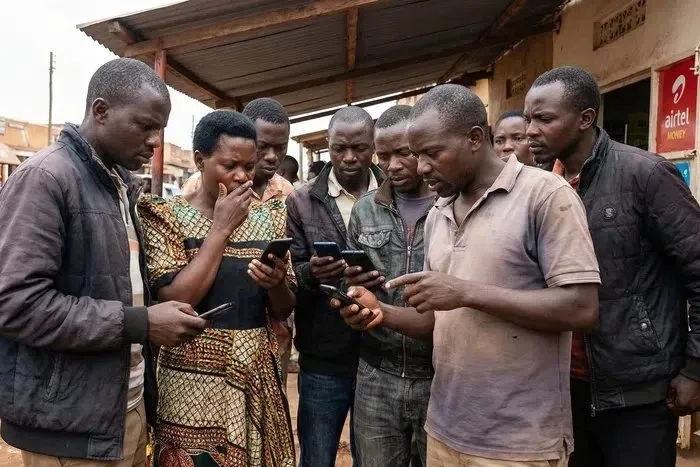
The possibility of an internet shutdown during an election is not theoretical.
It has happened repeatedly.
In Uganda's January 2021 presidential election, authorities ordered a nationwide internet shutdown on the eve of voting. The total blackout lasted for several days. By the time internet access began returning, incumbent President Yoweri Museveni had already been declared the winner.
Five years later, Uganda did it again.
Ahead of the January 15, 2026 general election, the Uganda Communications Commission directed operators to suspend public internet access. The restrictions extended across mobile broadband, fibre, fixed wireless connections and other services.
The country went through another nationwide blackout during the election.
Internet access began returning five days later, after Museveni had been declared the winner of another presidential term.
Uganda is not an isolated example.
During Tanzania's October 29, 2025 general election, the country experienced a nationwide internet shutdown.
The African Union Election Observation Mission reported that the shutdown affected its own communications and the transmission of reports from election observers.
More importantly, the AU said the blackout limited observers' ability to monitor crucial parts of the election process, including voting, the closing of polling stations and the counting of votes.
The African Union ultimately concluded that the internet shutdown, alongside other problems, compromised the integrity of the election.
The Republic of the Congo has also repeatedly disconnected its population around elections. During its March 2021 presidential election, broadband internet, mobile internet and SMS services were shut down shortly before polls opened.
Cameroon has experienced its own internet restrictions and, following the October 2025 presidential election, the African Commission on Human and Peoples' Rights expressed concern about recurrent internet shutdowns during election period.
These incidents expose an uncomfortable reality about modern elections.
Connectivity itself can become part of the electoral battlefield.
Governments may justify internet shutdowns on grounds of national security, public order, misinformation, hate speech, or technical glitch. The underlying motive may be disputed, difficult to prove, or vary from one country to another. But whatever the justification, the consequence for election transparency is the same: the electoral process continues while the channels for independent observation and evidence verification disappear.
For a conventional cloud-based election platform, an internet shutdown can create a dangerous gap in visibility. It can also call the integrity of the evidence into question, as there is no guarantee that the evidence remains organized, verifiable, or demonstrably connected to the election process.
And five days is an eternity during an election.
In that time, votes can be counted, results collated, and a winner declared. When connectivity returns, hundreds of thousands of photos, videos, reports, and result records are useful only to the extent that they can be organized into a coherent election record, geo-tagged to their polling units, timestamped to the events they document, cryptographically bound to its source, and demonstrably tied to the election process.
Altirev is designed to preserve that continuity.
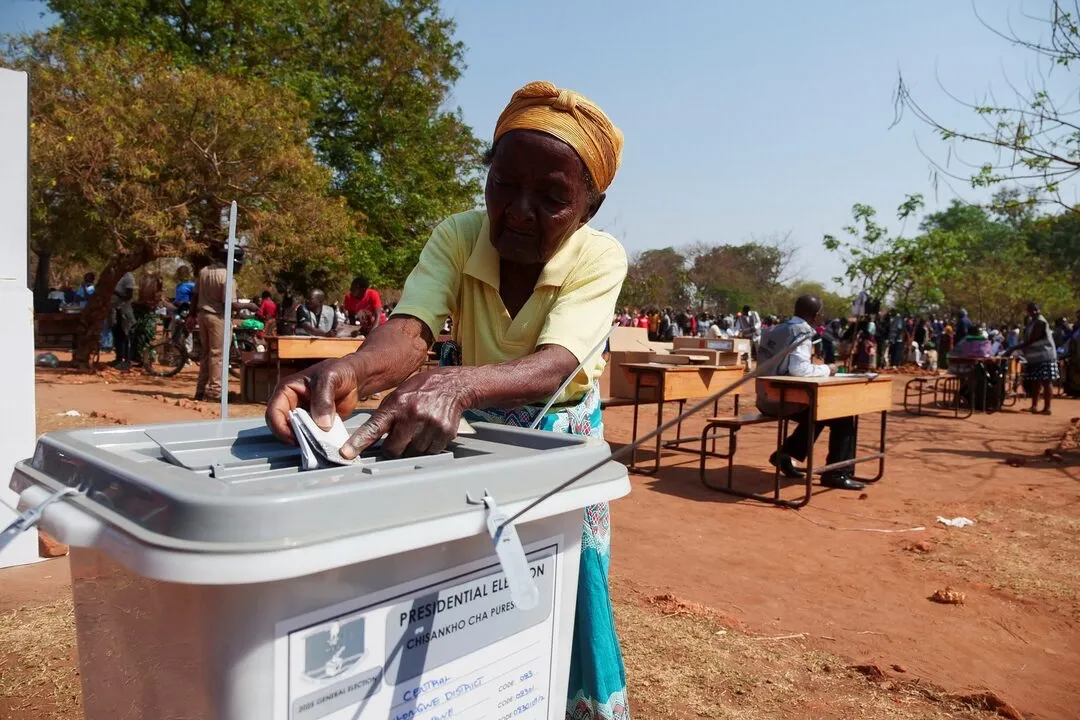
While offline, election results, incident reports, and supporting evidence remain securely persisted on-device with their relevant cryptographic metadata, timestamps, geotags, and election context. When connectivity returns, the system synchronizes the backlog, applies the appropriate verification and validation processes, aggregates the data across polling units and collation levels, and reconstructs the sequence of election events.
Once synchronization is complete, the election record can still tell the story of what happened, when it happened, and where it happened, as though the interruption in connectivity had never broken the chain of observation.
How Altirev Works Offline

Achieving that continuity requires more than simply allowing an app to open without an internet connection.
Altirev was designed as an offline-first election operations platform. Polling Unit Agents and Collation Officers can continue performing their essential duties even when their devices cannot reach the internet. Their work is securely persisted on-device and queued for transmission when connectivity returns.
The persisted data can survive app closures, device restarts, and battery drain, ensuring that a restart or battery drain does not erase the election records, even if connectivity is not restored for weeks or months.
In other words, Altirev treats an internet shutdown as an interruption in transmission, not an interruption in the election record. Altirev’s offline capability is not a convenience for areas with poor network coverage. It is, in fact, part of the platform’s resilience architecture.
We cannot prevent a government or telecommunications authority from shutting down national internet infrastructure. Nor should any election technology pretend otherwise.
What we can do is remove the damaging consequences of that action.
No single telecommunications switch should be capable of blindfolding every independent observer of an election.
Download Altirev on App Store and Google Play Store. Sign Up to become a trusted election Observer.