

In a country like Nigeria, where elections are often intense, complex, and sometimes controversial, having a transparent and reliable way to monitor voting processes is critical. This is where Altirev comes in.
Altirev is an election monitoring and intelligence platform designed to bring transparency, accountability, and real-time visibility into electoral processes. It empowers citizens, observers, political organizations, and institutions to track what is happening at polling units as it unfolds.
But Altirev doesn’t stop at visibility, it goes further into something far more important: Verification.
At the core of this capability is its most powerful innovation: the Election Intelligence Engine (EIE), pronounced “Eye.” This system acts as a super verification layer, continuously scanning election data to detect anomalies, discrepancies, and signs of manipulation across every level of collation.
What Exactly is Altirev?
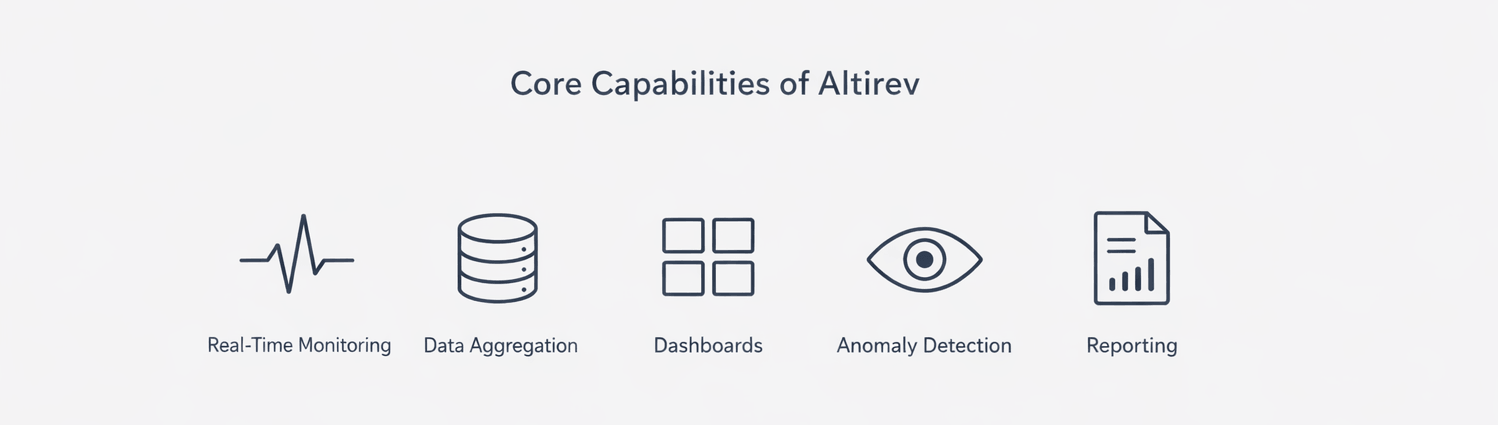
Altirev is an election intelligence infrastructure that allows users to:
- Monitor election activities in real time
- Receive structured reports and results from polling units
- Aggregate and analyze data across polling units, wards, LGAs, states and National.
- Visualize election trends through dashboards
- Automatically detect inconsistencies in reported results
At its core, Altirev transforms raw, ground-level information into structured, actionable insights.
Unlike traditional election observation, which often relies on delayed reports, Altirev is built for speed, scale, accuracy, and intelligent verification. It bridges the gap between what is happening on the ground and what decision-makers, stakeholders, and the public can see and trust.
Importantly, Altirev is designed with clear roles:
- Only INEC-accredited party agents can submit election data from polling units
- The public, however, can view, like, comment, and share validated polling unit reports through a dedicated Observer interface.
This ensures that data remains controlled, credible, and verifiable, while still being widely accessible.
How Altirev Works
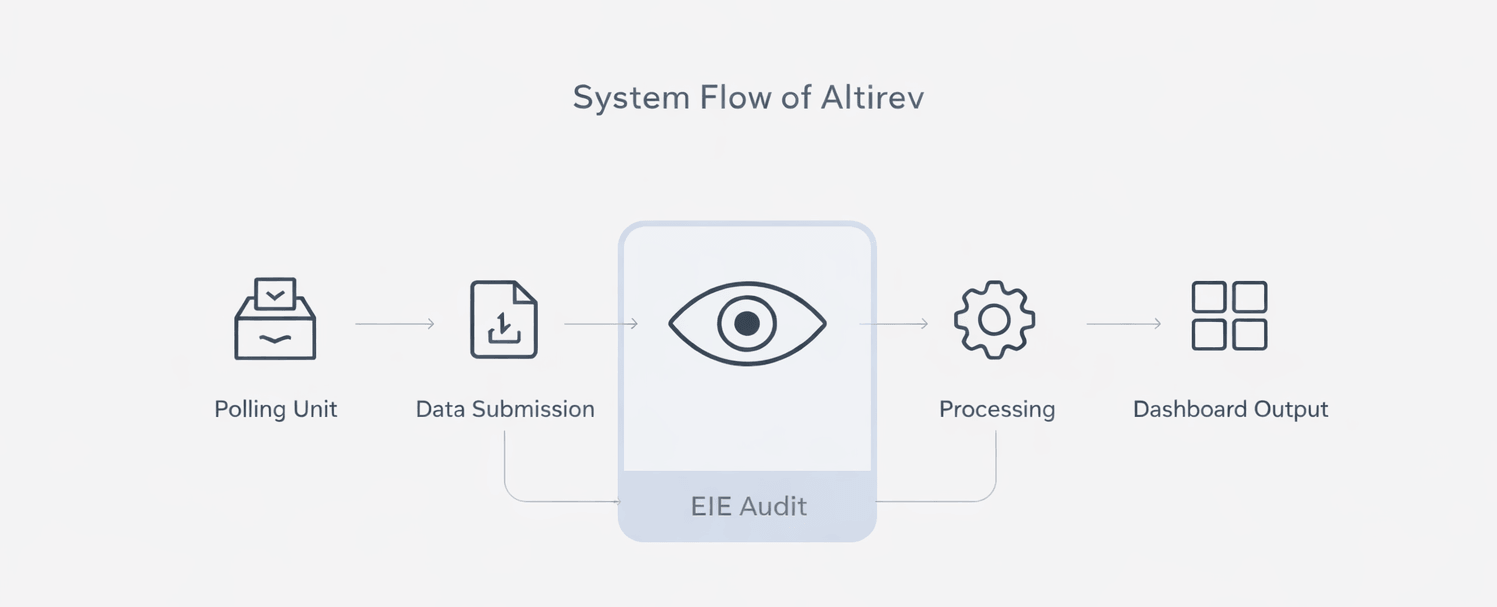
Altirev operates through a combination of data collection, validation, intelligent analysis, and visualization.
Ground-Level Data Input

Data collection on Altirev is structured and controlled.
Only INEC-accredited party agents at polling units can submit data. These reports may include:
- Voter turnout updates
- Incidents (violence, vote buying, intimidation)
- Delays in voting
- Results as announced at the polling unit
Each report is tied to a specific polling unit, ward, LGA, and State, and aligned with Nigeria’s official electoral structure.
To address one of Nigeria’s biggest election challenges, poor network connectivity in rural areas, Altirev features a background offline mode.
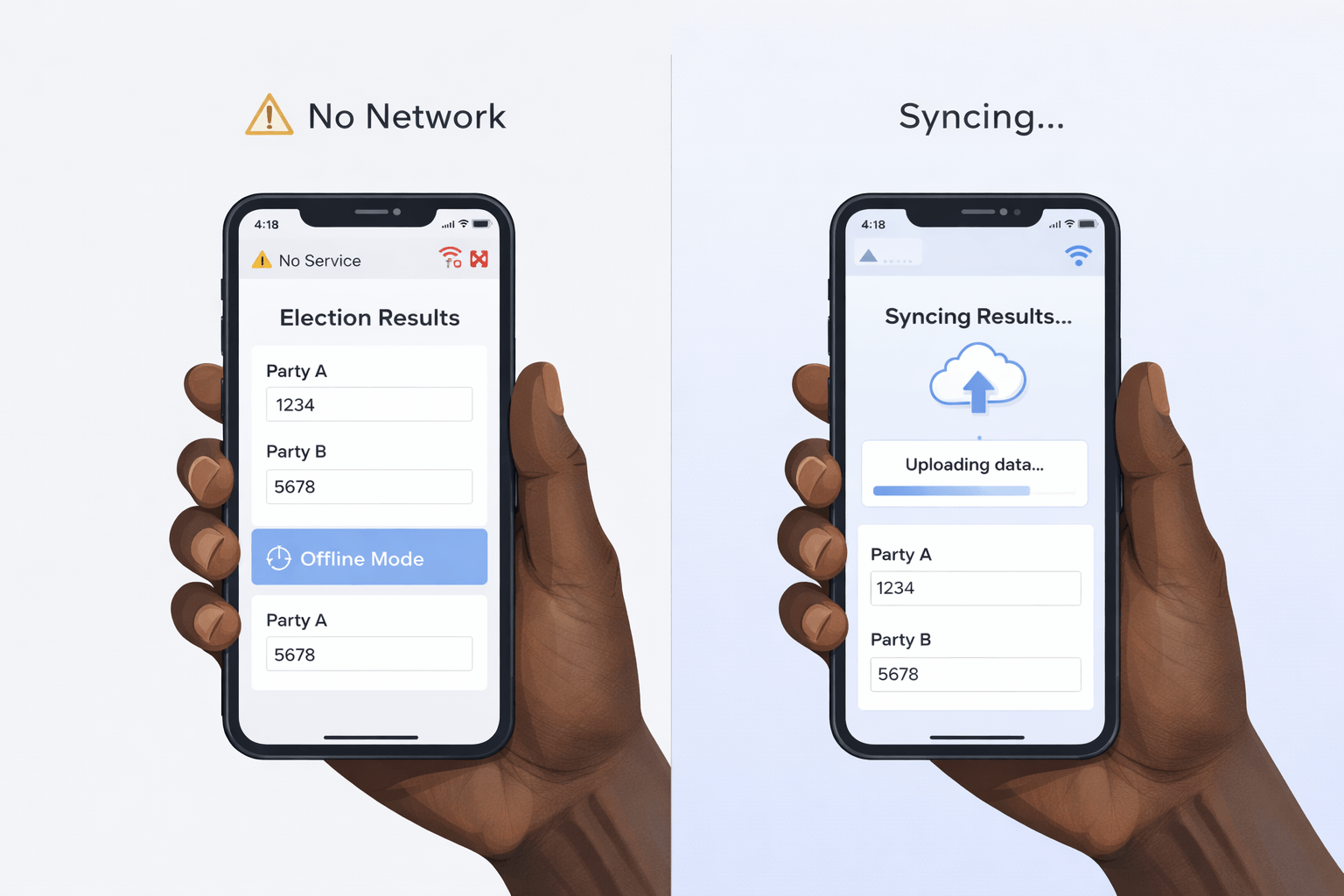
Agents can:
- Capture and store results without internet access
- Continue reporting seamlessly in low-network environments
- Automatically sync data once connectivity is restored
This means that even in the most remote locations, no data is lost, or excluded. The system is built for Nigeria’s realities.
Real-Time Data Processing
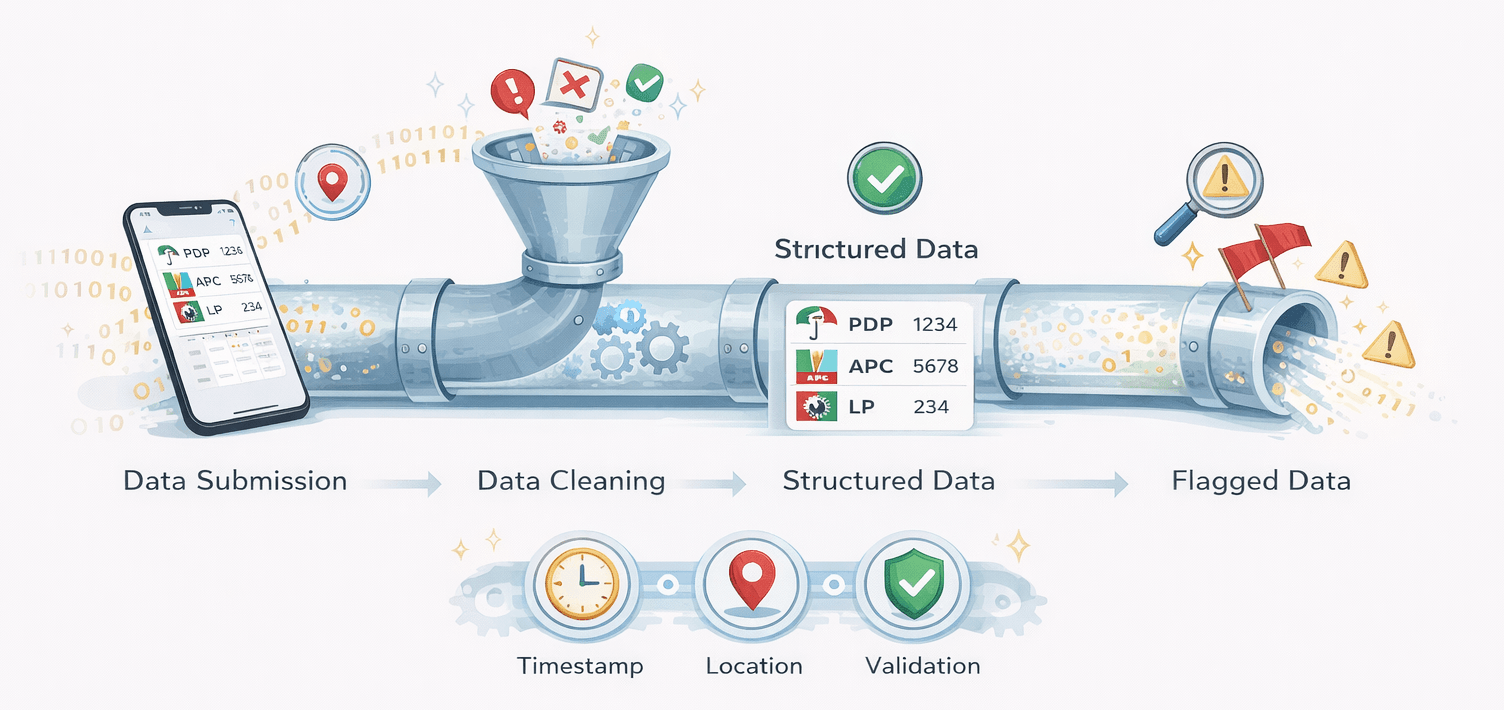
Once submitted (or synced), the data is processed and organized:
- Reports are time-stamped
- Locations are clearly mapped
- Suspicious entries are automatically flagged
This data doesn’t just get stored on our databases, it gets interrogated instantly.
Every single entry is passed through the Election Intelligence Engine (EIE) in real time.
The Election Intelligence Engine (EIE) in Action

The EIE is an autonomous anomaly detection system that continuously scans incoming and aggregated election data. From the polling unit level to ward, LGA, state, and even national collation centers, the EIE acts like a digital watchdog.
It operates across every layer of the election pipeline:
- Polling Unit (PU)
- Ward collation
- LGA collation
- State collation
- National aggregation
And at each level, it is constantly asking
Do the official numbers reflect the reality on ground?
What the EIE Detects
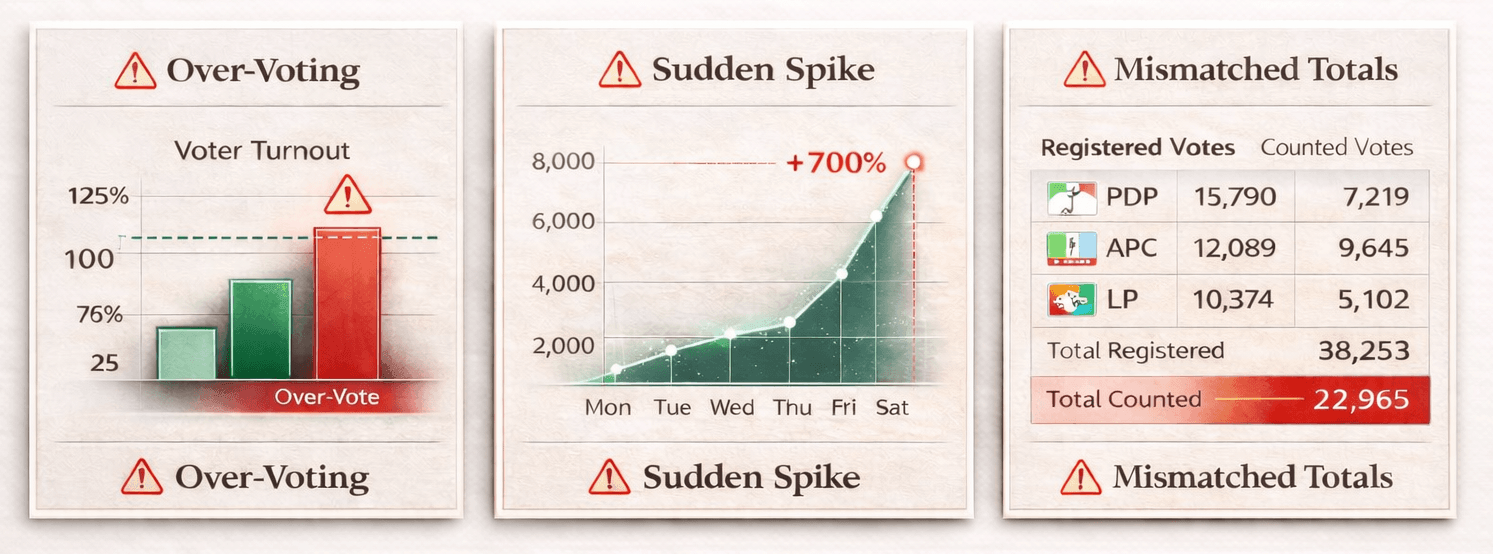
The EIE doesn’t rely on complaints, it relies on data behavior. It can:
- Detect over-voting and impossible turnout figures
- Flag inconsistencies between polling unit results and collation totals
- Identify unusual voting patterns or sudden spikes
- Spot discrepancies introduced during ward, LGA, State, or National collation
- Highlight potential manipulation before final results are declared
In many elections, manipulation doesn’t happen at the polling unit, it happens during collation. Numbers are adjusted quietly. Totals are altered subtly.
The EIE tracks the full journey of every number, from origin to final declaration, and flags inconsistencies the moment they appear.
In simple terms:
While humans are watching the election, the EIE is watching the numbers, and it never blinks.
Monitoring Interfaces: Live Stream vs Command Center
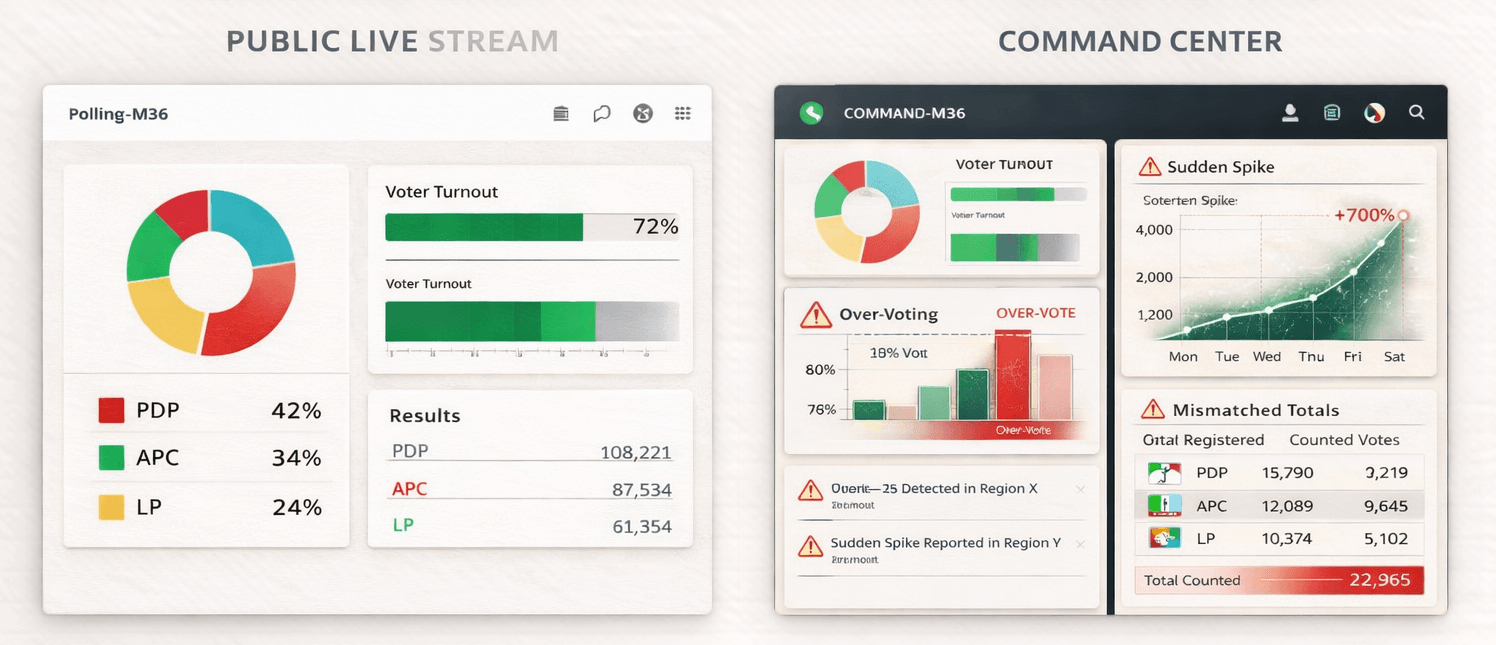
Altirev is designed with two powerful but distinct viewing experiences, each tailored to its audience.
Public Live Stream Dashboard
The general public accesses Altirev through the Observer interface, where they can:
- View live analytics of result aggregates
- View real-time reports and result evidence
- Track election activity across locations
- Follow updates as they happen nationwide
This interface is read-only, ensuring that the public gets clean, verified, and tamper-resistant information without introducing noise into the system.
Altirev Command Center (Stakeholder Dashboard)
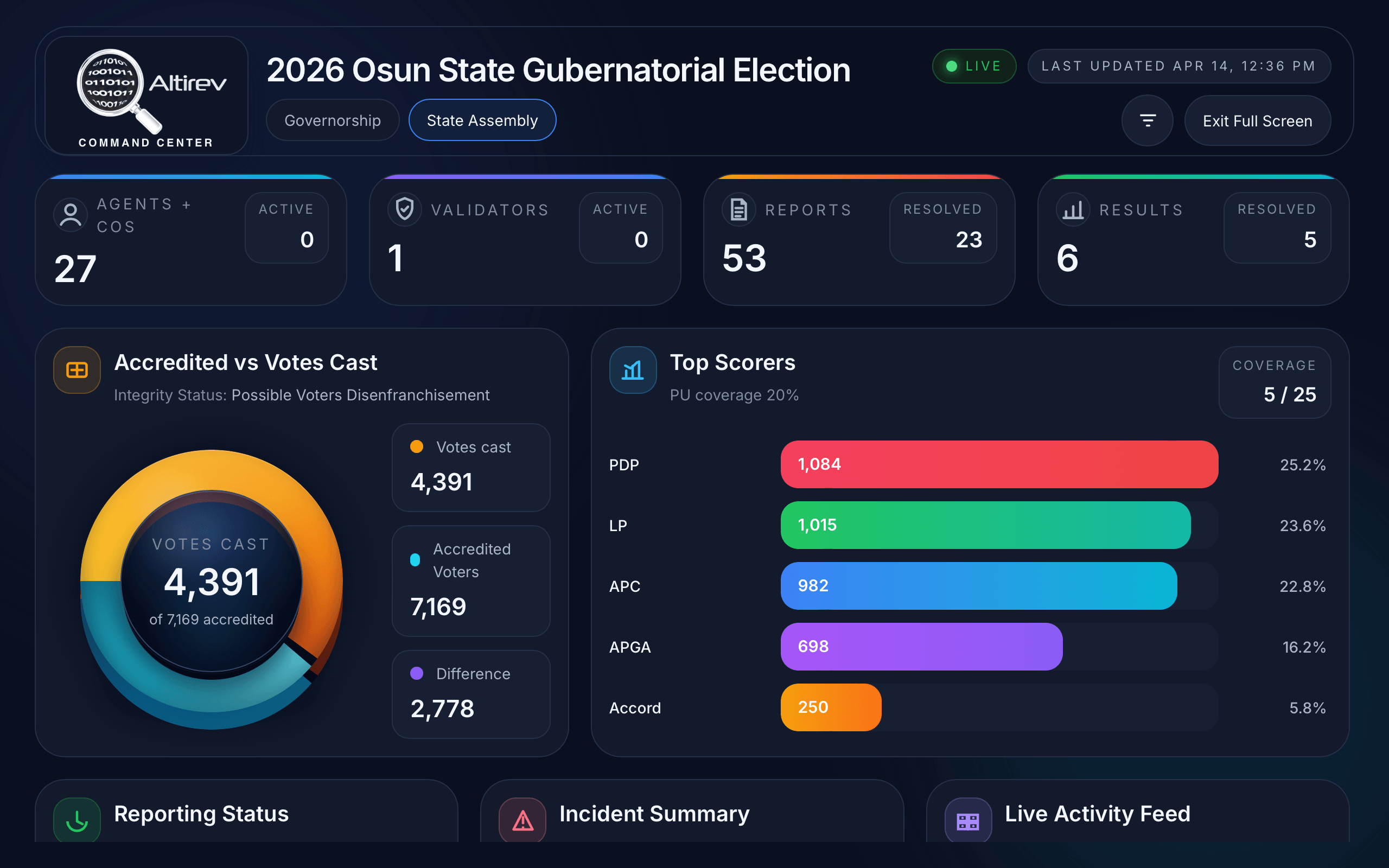
For stakeholders, such as political parties, observer groups, and decision-makers, Altirev provides a far more advanced interface: the Altirev Command Center.
Think of it as a war room for election intelligence.
Here, stakeholders can:
- Monitor live data across all regions
- View analytics of election trends and performance in real time
- Receive alerts from the EIE
- Identify anomalies instantly
- Make data-driven decisions on the fly
The Command Center goes beyond a dashboard, it’s a real-time hub for coordinating electoral strategy and response.
Why Altirev Matters in Nigeria
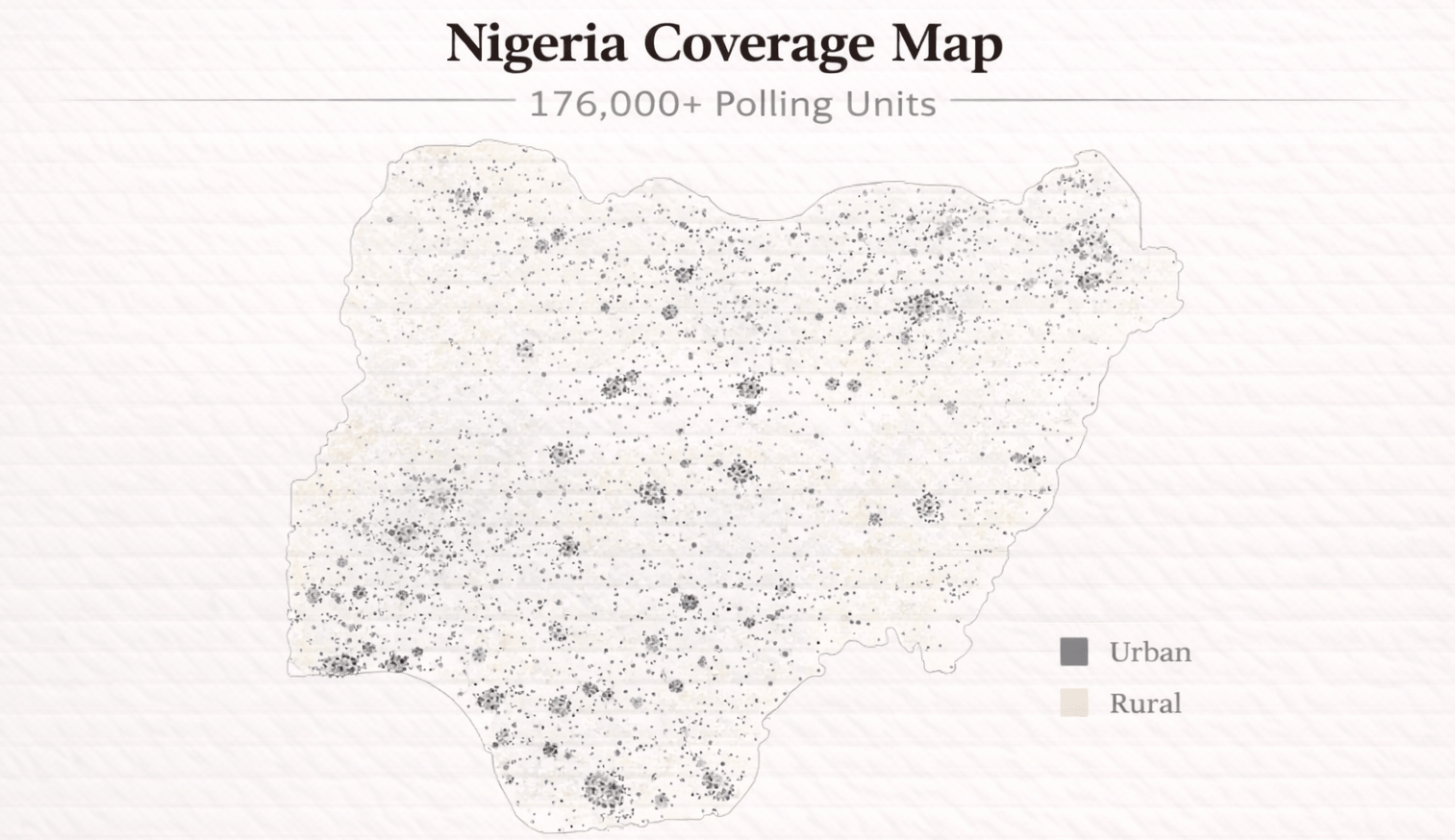
Nigeria has over 176,000 polling units, spread across urban and rural areas. Monitoring such a large and decentralized system is extremely difficult.
Historically, challenges have included:
- Delayed or inaccurate reporting
- Lack of transparency at polling units
- Difficulty verifying official results
- Manipulation during collation processes
- Limited visibility into rural voting areas
Altirev addresses these challenges by:
- Ensuring only verified agents submit data
- Supporting offline data capture in low-network regions
- Providing real-time national visibility
- Backing everything with intelligent anomaly detection
Instead of relying on a few official channels, it creates a system powered by trusted inputs and intelligent oversight.
Key Use Cases of Altirev
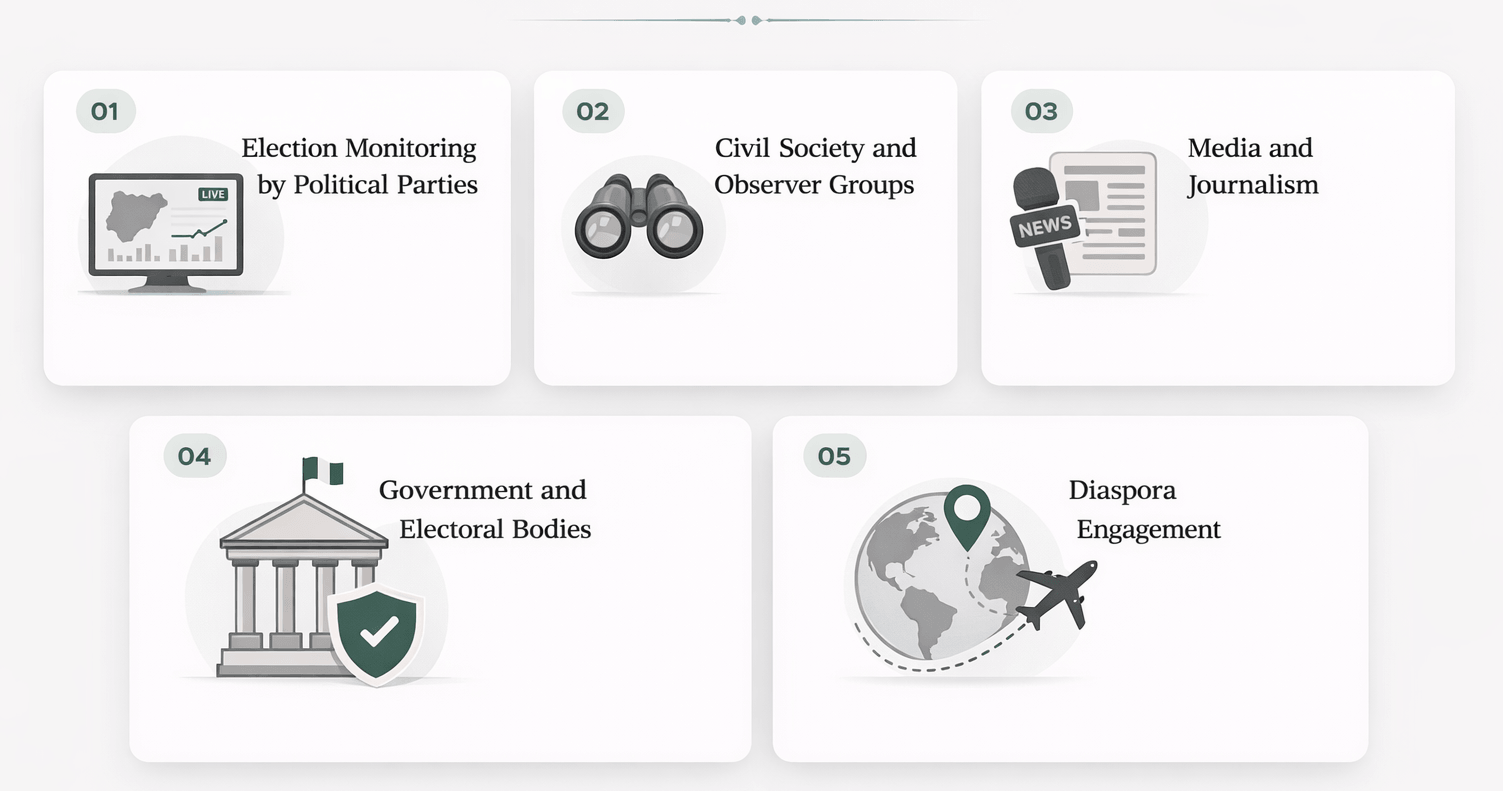
Election Monitoring by Political Parties
Political parties can:
- Receive real-time updates from accredited agents
- Track performance across regions
- Detect suspicious patterns instantly through the EIE alerts
This enables faster response and stronger evidence in disputes.
Civil Society and Observer Groups
Organizations can:
- Monitor nationwide activity
- Identify irregularities as they happen
- Back reports with data-verified anomaly detection
This shifts election observation from passive reporting to active verification.
Media and Journalism
Journalists gain access to:
- Real-time field data via the Observer interface
- Centralized reporting
- Insight into anomalies and inconsistencies
This leads to more accurate, data-driven election coverage.
Government and Electoral Bodies
Altirev can complement official systems by:
- Highlighting disruptions early
- Detecting inconsistencies in reported figures
- Acting as an independent verification layer
The EIE becomes an early warning system for electoral integrity risks.
Diaspora Engagement
Nigerians abroad can:
- Follow elections in real time
- Monitor their regions
- Understand not just outcomes, but data credibility
Key Features That Make Altirev Stand Out
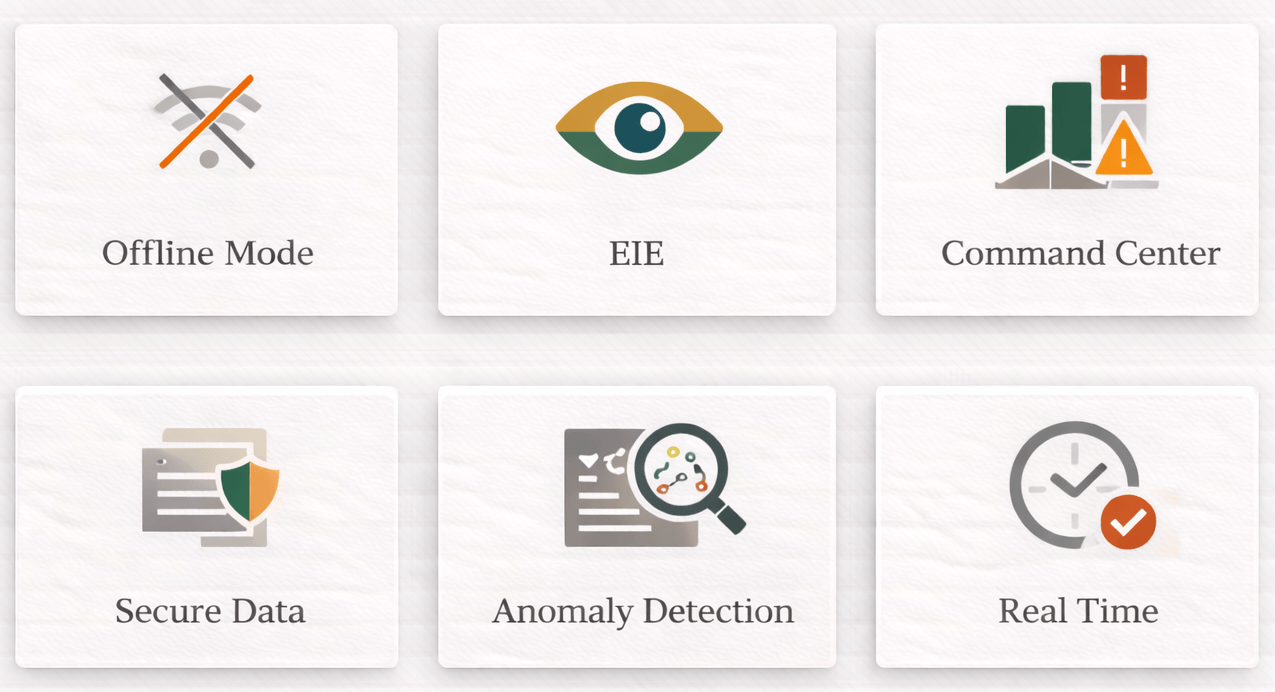
Real-Time Reporting
Live updates from thousands of polling units.
Controlled Data Input
Only INEC-accredited party agents can submit data, ensuring credibility and traceability.
Offline Mode
Seamless data capture in low or no-network areas, with automatic sync when connectivity returns.
Structured Data System
Organized, location-specific data aligned with Nigeria’s electoral structure.
Election Intelligence Engine (EIE)
Altirev’s defining feature:
- Continuously scans all incoming data
- Detects anomalies across every level of collation
- Flags discrepancies in real time
- Acts as a super verification layer
Dual Dashboard System
- Observer Live Stream for public visibility
- Command Center for stakeholder intelligence and decision-making
Scalability
Optimized to handle nationwide election data seamlessly.
Transparency with Accountability
Not just open data, but intelligent, verifiable transparency.
The Bigger Picture: Strengthening Democracy
Altirev is more than just an election monitoring platform, it is a tool for democratic accountability.
In environments where trust in electoral processes may be low, transparency alone is not enough. What’s needed is verifiable transparency.
By combining:
- Controlled data collection
- Nationwide visibility
- Intelligent anomaly detection
Altirev helps:
- Reduce misinformation
- Expose manipulation early
- Increase public confidence
- Encourage fair electoral practices
It shifts elections from being opaque processes to open, trackable, and verifiable systems.

Altirev represents a new approach to election monitoring in Nigeria, one that combines technology, structured participation, and intelligent verification.
It doesn’t just help you follow elections. It helps you understand them, question them, and decide what to trust.
With trusted agents on the ground, resilient offline data capture, a real-time national view, and one powerful EIE scanning every data point, Altirev ensures that elections are not just observed but scrutinized, verified, and ultimately trusted.
Download Altirev on App Store and Google Play Store. Sign Up to become a trusted election Observer.
Next read 👉 How Altirev is Transforming Election Monitoring in Nigeria