

Elections don’t fail because people don’t care. They fail because by the time the truth shows up… it’s already too late.
That’s the entire problem.
For decades, election monitoring in Nigeria has been built on delay. Delayed reports, delayed collation, delayed verification. And in that delay lives manipulation, and doubt.
Altirev flips that entire model on its head.
The Problem With “Later”
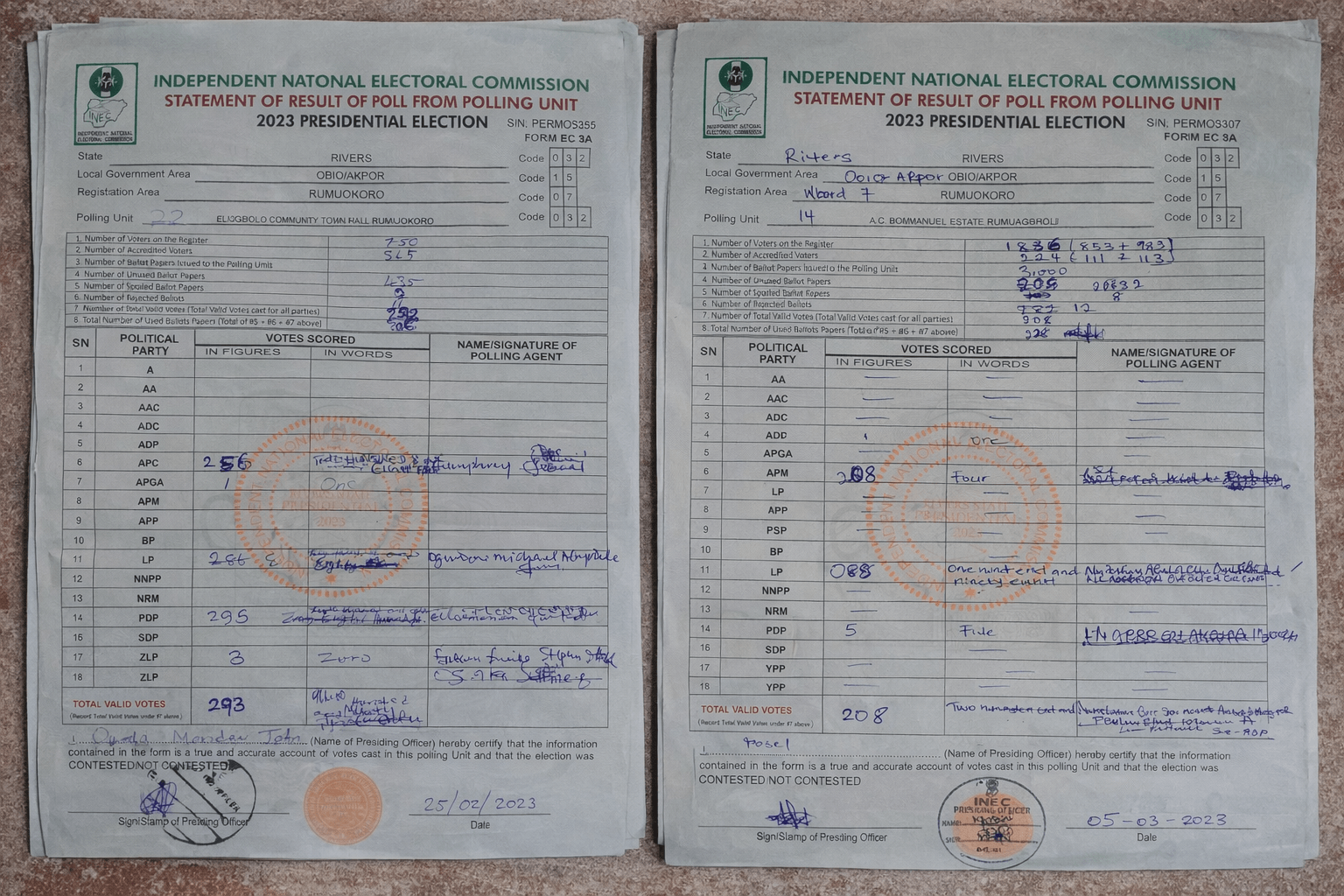
Traditional election monitoring follows a structured process, on paper.
At the polling unit level, INEC ad-hoc staff record results on the EC8A result sheet. From there, those results are physically transported to the Ward collation center.
At the Ward collation center, INEC officials manually compile polling unit results into Form EC8B.
And this is where things start to get interesting.
Because at this stage, and every stage after, the process becomes:
- Manual
- Non-transparent
- Vulnerable
The same pattern will repeat upward from:
- Ward → LGA (EC8C)
- LGA → State (EC8D)
- State → National (EC8E)
At each level, results are re-entered, recomputed, and re-declared.
Not verified.
Rewritten.
By the time results are announced, sometimes hours later, sometimes deep into the night, the numbers have passed through too many hands to be trusted at face value.
That’s the weakness Altirev targets directly.
Real-Time Changes Everything
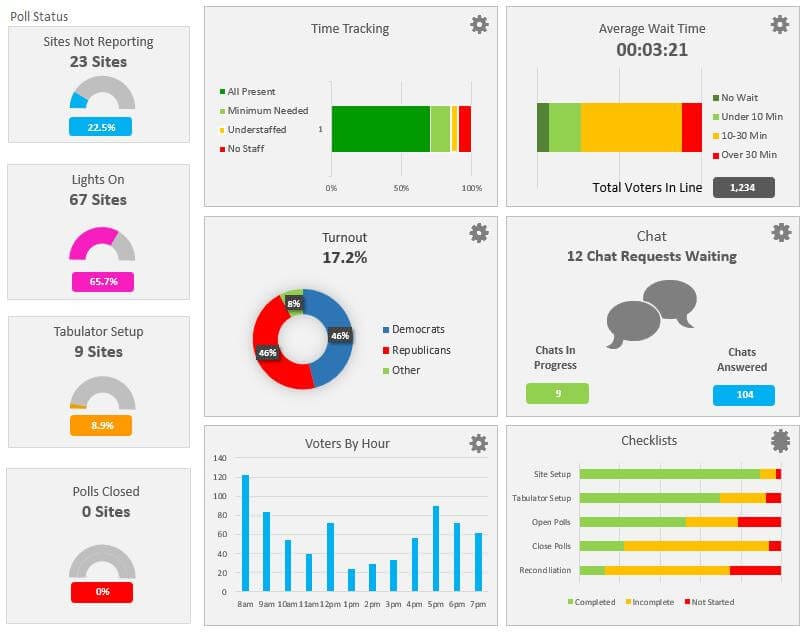
Real-time election data isn’t just “faster updates.” That’s a shallow way to look at it.
It fundamentally changes power dynamics.
With real-time systems:
- Data is captured instantly at polling units
- Results are transmitted immediately
- Stakeholders, analysts, and the Observing public see the same data
- Irregularities are flagged and made visible as they happen, not after
This removes one critical advantage: the ability to exploit delays between data capture and public visibility.
Because manipulation depends on gaps, and real-time systems eliminate those gaps.
The Altirev Approach
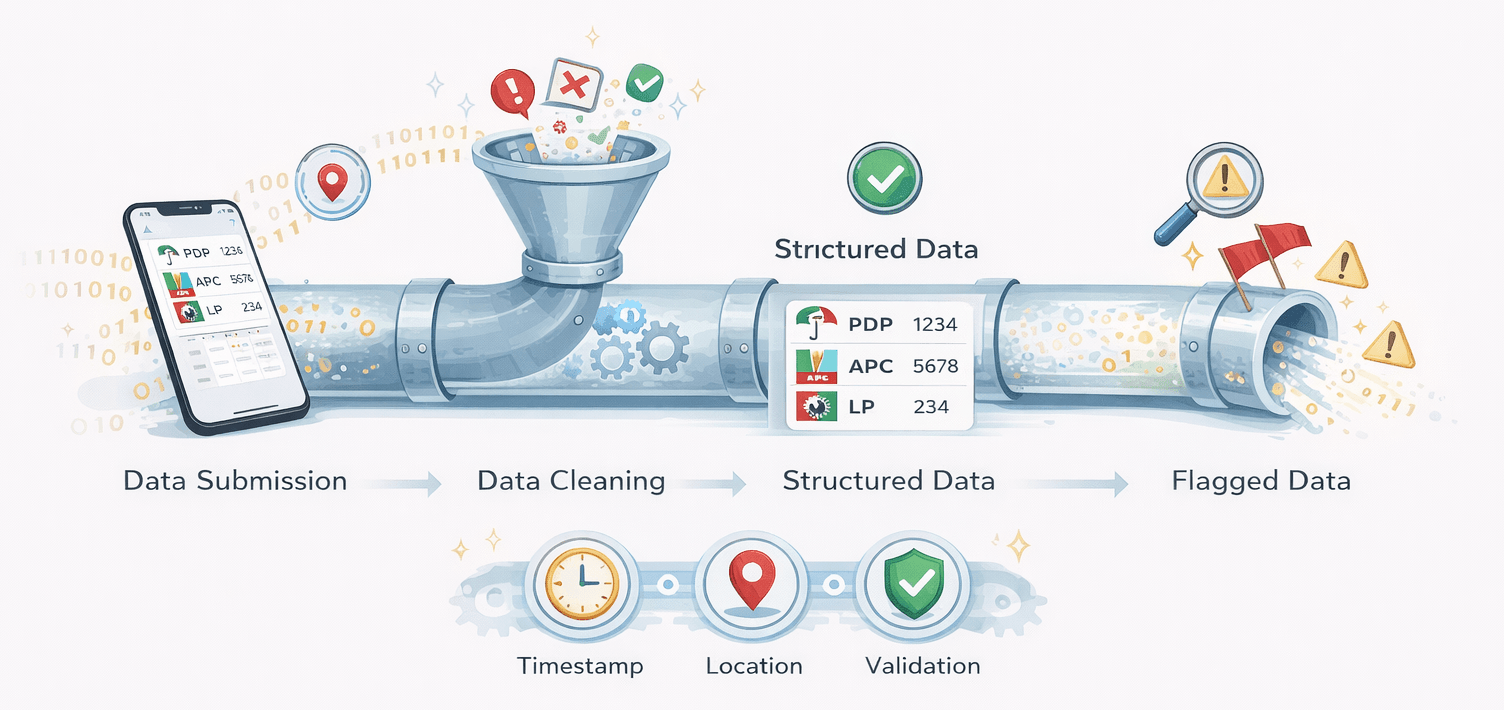
Altirev doesn’t just show data faster. That would be basic.
It introduces a system where data is:
- Captured
- Structured
- Compared
- Validated
- Exposed
All in real time.
At the center of this is the Election Intelligence Engine (EIE).
What the EIE Actually Does
The EIE continuously analyzes incoming data across every level:
- Polling Unit → Ward → LGA → State → National
It checks for things like:
- Vote totals that don’t add up
- Accredited voters vs actual votes cast
- Irregular voting patterns
- Sudden spikes that don’t match surrounding data
- New party entries appearing where they shouldn’t
And it doesn’t sleep, take breaks, or get tired.
It flags anomalies immediately, while the election is still happening.
That’s active intelligence.
Transparency Is No Longer a Promise
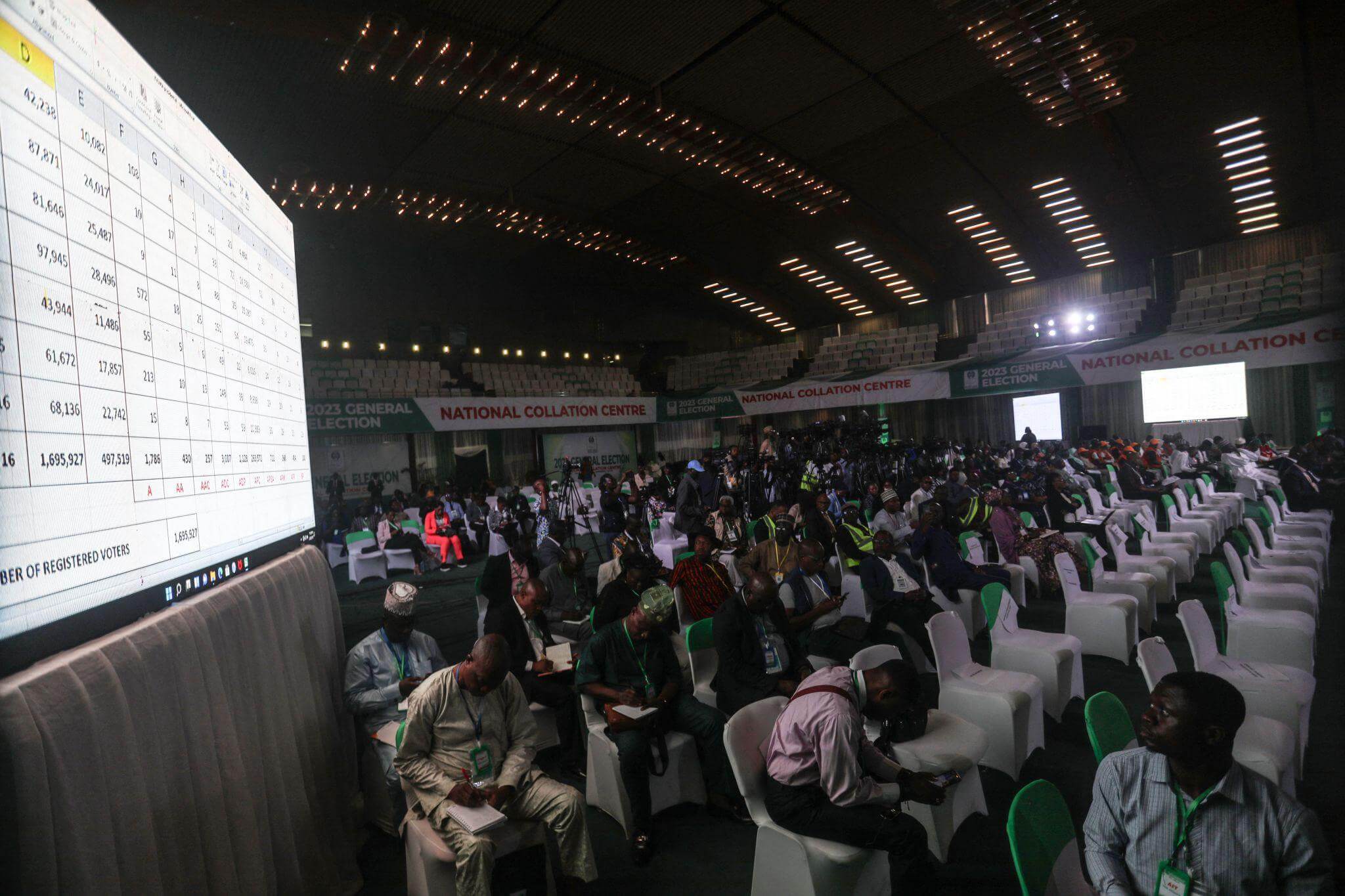
Traditional systems talk about transparency. Altirev enforces it.
Because when:
- Data is public
- Updates are instant
- Patterns are visible
There’s nothing left to “manage behind the scenes.” Transparency stops being a statement and becomes a byproduct of the system.
Speed Isn’t the Point, Transparency Is
Most people think that real-time election data is about speed. It’s not.
It’s about who has access to timely, verifiable information.
In delayed systems:
- Authorities control when information is released
- Stakeholders react after the fact
- The public consumes finalized outcomes
In real-time systems:
- Everyone sees the process unfold
- Data speaks before narratives form
- Manipulation becomes visible, not arguable
That shift in power dynamics is massive.
Why This Matters Now

Elections are evolving. Expectations are evolving faster, and young Nigerians no longer want to wait for:
- Final results
- Press statements
- Official assurances
They want access.
They want visibility.
They want proof.
And real-time systems like Altirev deliver exactly that. Because once Nigerians experience elections in real-time, there’s no going back to waiting.
Download Altirev on App Store and Google Play Store. Sign Up to become a trusted election Observer.
Next read 👉 How Altirev Helps Prevent Electoral Fraud